Why does a grammatical "sentence" also mean a judge's punishment?
English Declassified reads grammar the way a courtroom reads a transcript: a subject is a defendant, a verb is a verdict — and that's not a coincidence. Twenty-six letters of technical investigation, plus the number system tying them together.
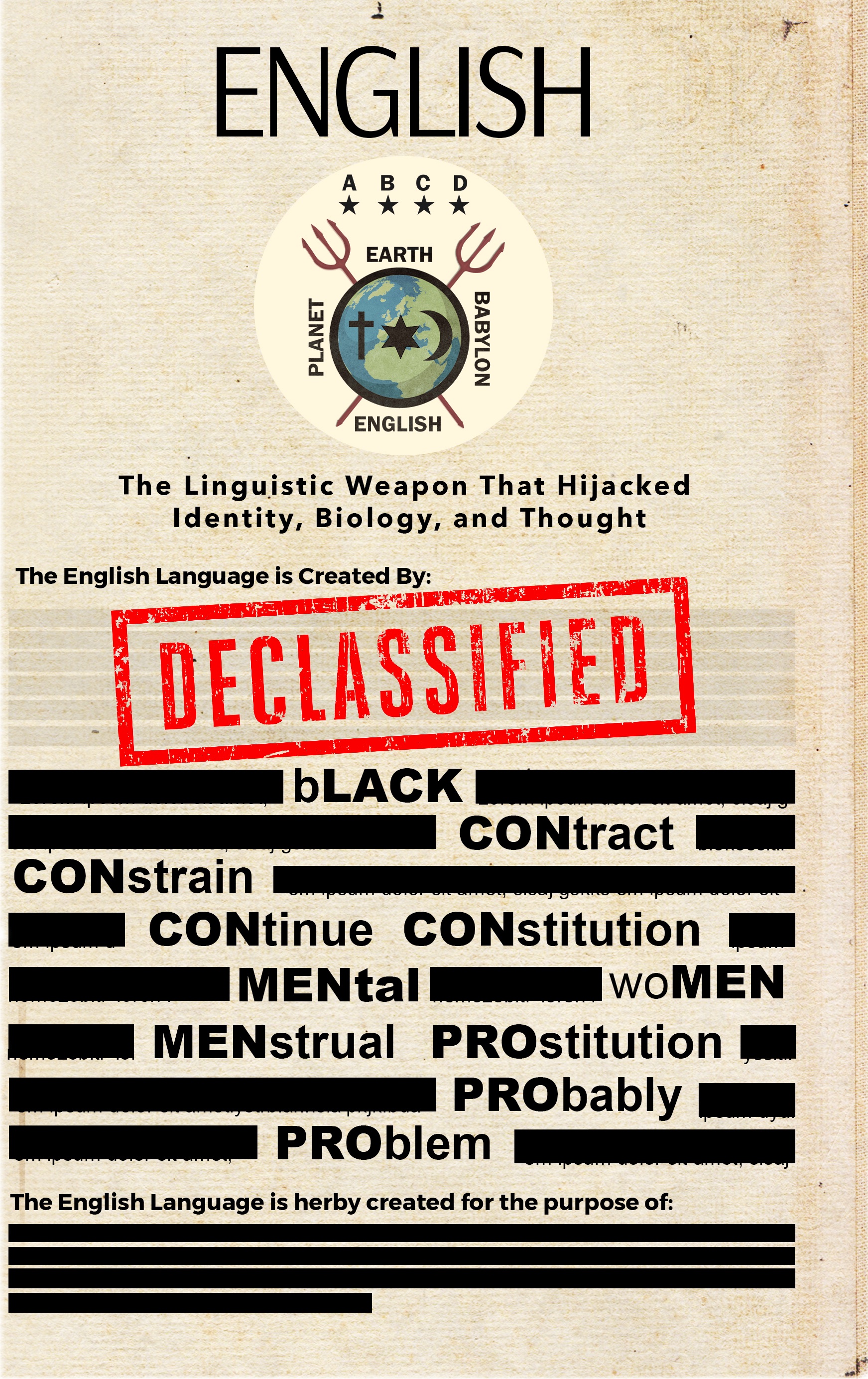
The Book
English Declassified
In English, a "sentence" is two things at once: a grammatical unit, and a judge's punishment. English Declassified takes that seriously. A subject is treated the way a courtroom treats a defendant. A predicate — literally "pre-determined" — is already decided before you open your mouth. The book runs that argument all the way through, then does the same rigorous thing letter by letter: real definitions, real etymology, real phonetics, twenty-six chapters — organized not just alphabetically, but by a numerical structure connecting letters no dictionary points out (A, J, and S, for instance, share a hidden number tie so exact that ADJUSTMENT and JOURNALIST both prove it twice over). This is the technical volume: the rules, the code inside them, and why nobody ever explained either to you.
- Grammar as Law
- Real Etymology
- The Number Behind the Alphabet
- Letter Symbolism
The Author
Sélanor
Sélanor built English Declassified around one governing question: why does English grammar borrow its vocabulary from a courtroom? A "sentence." A "subject." Being "objectified." The book treats that as a structural claim, not a pun, and checks it the way it checks everything else — against real definitions, real etymology, real phonetic data, letter by letter through the whole alphabet.
Stay Connected
Join the Research
Get updates on new articles, research, and future books — independent of any social platform.